
Henry Winter’s World Cup Diary, Day 18
Click here to read World Soccer’s guide to the 2026 World Cup
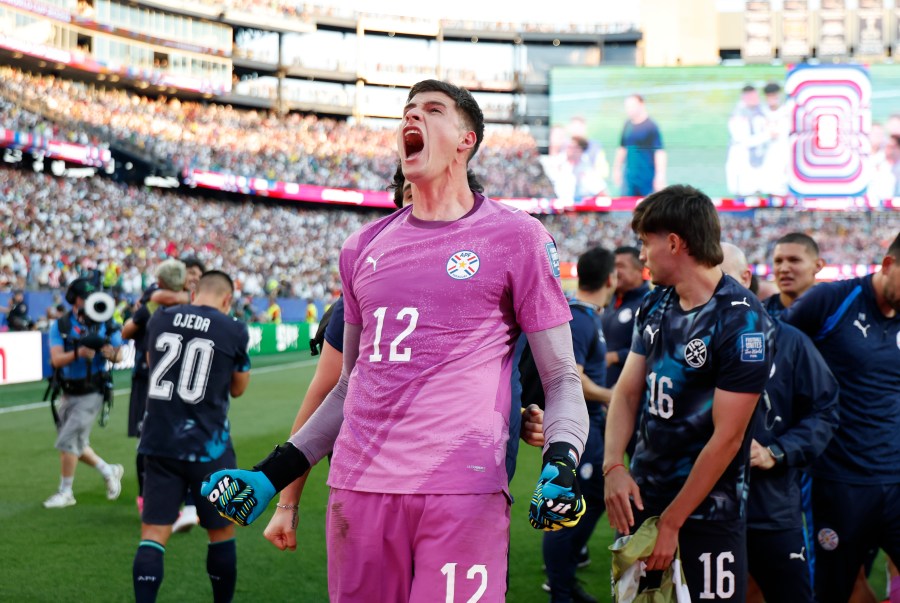
This is a public service announcement: penalties are not a lottery. The great Zlatan Ibrahimovic claimed they were when watching Germany lose their shootout to Paraguay. They were not a lottery when Paraguay’s keeper, Orlando Gill, read the intentions of Kai Havertz and Nick Woltemade. Like all goalkeepers, certainly in the modern era, he’d analysed their previous kicks, and known the probability of which way they’d go.
They were not a lottery when the German centre-back, Jonathan Tah, lost his nerve and skied his kick. They were not a lottery when Jose Canale kept his nerve to settle the shootout in Paraguay’s favour. He’d practised, he was confident, and he nailed it.
There was certainly no hint of any fortune when Ismail Saibari won the shootout in Monterrey in Morocco’s favour, breaking Dutch hearts. Gone are the days when players volunteered to take one after extra-time, when players who’d never taken a penalty before wandered forward, lambs to the slaughter.
If it was a lottery, why would professional footballers spend time after training practising? Why would serious universities produce research into the need for the taker to take a second or two longer when addressing the ball, slowing the heart-rate? Learned books have been written on it. Lectures given on it.
I asked Noni Madueke about the balance between the psychological and the technical in preparation. Note: nothing about luck. Madueke, one of the brightest minds in English football, knows it’s about honing technique and having belief. Some players work with psychologists to prepare them for the pressure of that long, lonely walk from the centre-circle and the knowledge that a missed penalty brings a wave of criticism, for some takers abhorrent racist criticism.
Madueke understood the need to be in the right frame of mind and possess the right technique. “A lot of it is psychological,” the winger said. “And a lot of it is how you strike the ball dependent on your run-up, whether you stop, whether you wait for the keeper or whether you just take a corner and look to strike it as cleanly as possible. It’s probably a mix of both (psychological and technical).” But definitely not a lottery.
⚽ ⚽
Scenes from Houston were relayed into the England media centre at the Kansas City Parks and Rec department. The images included Brazil’s Matheus Cunha consoling Ao Tanaka, the heartbroken Japanese midfielder. It wasn’t just a fleeting embrace from Cunha as the players milled or moped around after the final whistle, elated or deflated. Cunha’s was a genuine check on Tanaka’s welfare, looking him in the eyes, holding his face so he could register eye contact, and make Tanaka realise the respect and sympathy. Tanaka was overwhelmed by the emotion of defeat, perhaps by a sense of responsibility at having lost the ball in the build-up to Brazil’s winner, and by having worn the shirt of his friend, Kaoru Mitoma. He wanted to do his injured friend proud. Cunha’s compassion transcended borders. It also transcended clubs, and this was Manchester United and Leeds United. United.
⚽ ⚽
One of the fun moments of last year was being phoned by Carlo Ancelotti. He was still at Real Madrid, walking between appointments at the training ground, and calling to honour a promise to his old Everton coach Duncan Ferguson to provide a foreword for the Scot’s autobiography. I was the ghost writer and part of the deal was to do the foreword. No problem. Ancelotti was his usual friendly self, gave me some great lines about Ferguson, his character, his humour, some anecdotes, which I worked into the foreword. Now leader of that vibrant, volatile vessel of Brazil hopes, Ancelotti’s urbane, composed nature proved hugely important against Japan. He stayed in control, made the right subs, spread that calm to his team and Brazil prevailed. This is far from a great Brazil team. But they have one of the greats as a coach.
⚽ ⚽
Click here to read World Soccer’s guide to the 2026 World Cup