
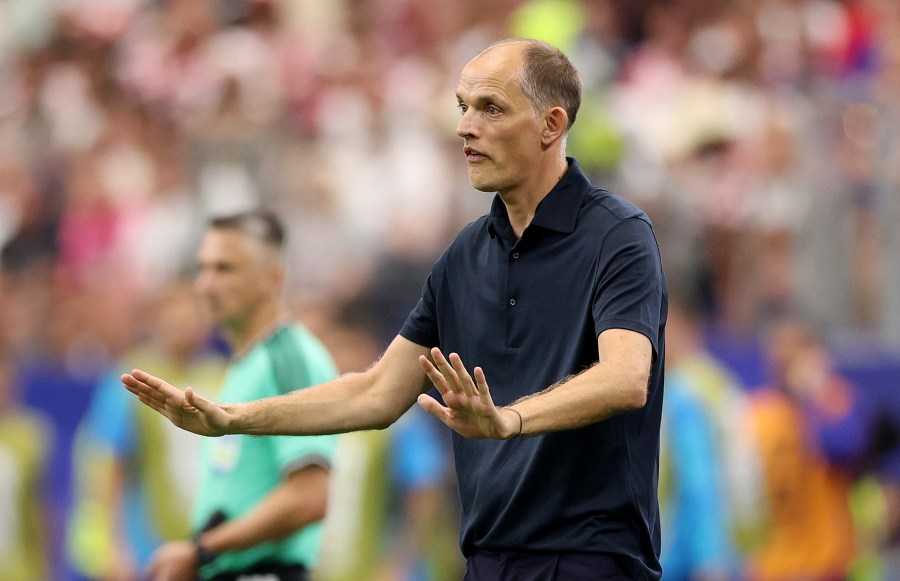
‘What did Thomas Tuchel say at half-time?’
Henry Winter on England’s second half turnaround in their win over Croatia
We’re giving away five annual subscriptions to World Soccer. For you chance to win one, click here.
Dallas.
What exactly did Thomas Tuchel and say at half-time? The best head coaches change games through tactical tweaks, occasional substitutions but also through simple words and astute man-management. In New Zealand they have a system where the national coaches of differing sports go off to a ranch and learn horse-whispering. The idea is that tone as well as the message is key. Bob Paisley, the legendary Liverpool manager, would talk quietly so players would have to concentrate even harder on his words. Sir Alex Ferguson would occasionally let rip with the famous hair-drier.
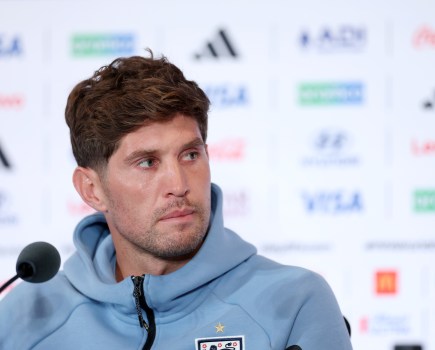
Tuchel delighted last night when one journalist called him “professor”. He is in a way. A professor of player psychology. It’s why he is so well-suited to dealing with England, a team too often inhibited by self-doubt. Tuchel didn’t say much when his players entered the dressing-room having just conceded a second equaliser to Croatia at Dallas Stadium.
Players need to sort themselves, visit what the locals call the restroom, adjust kit, maybe have a touch of massage, a drink. Clear their minds and refresh. Tuchel sat down and waited. “I gave them quiet time for themselves.”
There were then some tactical instructions to be relayed, for the full-backs to invert more into midfield, giving England more control in the centre, and for the team to press higher. “We spent way too much time in a low block, which is not our identity,” Tuchel said.
He got them to set little traps to lure Croatia on and then England could counter as Jude Bellingham did within two minutes. Tuchel’s impact was more to settle a side that had succumbed to nerves, and doing that infuriating default English trait of sitting back.
Tuchel knows all about England’s infamous struggles with pressure. So half-time was not a time for shouting at players. “Calm down,” Tuchel simply told them. “Play our way,” he encouraged. He reassured the players. “I told them that my perception of them and of the last 17 days (build-up Stateside) would not change off this result, no matter what the result is, but I want them to do it their way, our way.”
So here was Tuchel’s mission statement. “I want them to be brave, courageous, intense, and on the front foot and do it together and just go for it. I encouraged them with words, which was short and calm.” Tuchel told the players how much he trusted them and believed in them. “There is nothing to fear.”
And that has always been the key with England, confronting the fear. England have far more challenging days ahead, especially in hotter climes, and against better wide players who might target space behind Reece James and Nico O’Reilly. But the players know that they have a man with a plan in Tuchel, a manager who understands how to be a player-whisperer.
Click here to read World Soccer’s guide to the 2026 World Cup
⚽ ⚽
From the quiet to the noisy. England fans’ loud booing of the hydration breaks partly stemmed from what they see as the Americanisation of their game. The introduction of four quarters would compound the breaks to the great flow of football already brought on by VAR. I floated the idea of these hydration breaks being triggered only when the kick-off temperature was a certain level, say 25C. Dallas Stadium was a cool 22C.
Fifa points out that the final decision to have breaks at all World Cup matches was for consistency, and “to ensure equal conditions for all teams, in all matches”. Fifa felt it wasn’t right to have some breaks for some teams and not for others, that “it wasn’t a level playing field”.
Yet the moment you have teams playing at different times, which could be hotter or cooler, or in different stadia, which could be air-conditioned or open to a blazing sun, the level playing field has been ploughed up anyway. The hydration break has lost its initial relevance now that US TV runs commercials through it.
⚽ ⚽
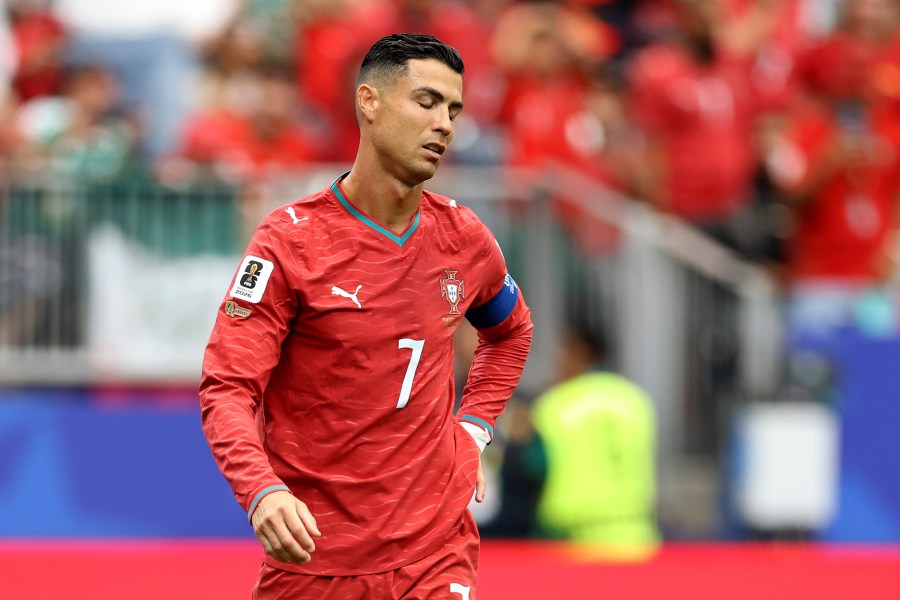
Wandering through the magnificent Dallas Stadium, I encountered a Mexican woman obsessed with Cristiano Ronaldo. She was celebrating Portugal (briefly) taking the lead, and when I explained Ronaldo hadn’t contributed to the goal, she didn’t hesitate to deliver her verdict on why Ronaldo was the greatest living footballer. All the usual gushing praise of the fitness and the technique. She couldn’t accept that Ronaldo was not such an important part of Portugal’s plans any more, given Old Father Time testing a 41-year-old.
Instead, she launched into a diatribe about Lionel Messi and why he should have been sent off against Algeria. I tried to explain that it wasn’t violent, that it was clearly accidental and that Argentina’s No 10 immediately held his hands up in apology when connecting. It should have been a yellow but certainly not a red. She was convinced it was all a conspiracy to protect Messi. Everyone was on his side, apparently, authorities and the media, and her beloved Ronaldo wouldn’t get that protection.
I’ve experienced some of the Messi-Ronaldo rivalry when voting for one or other of these modern greats in the Ballon d’Or over the past two decades. The reaction from followers of the runner-up, Messi or Ronaldo, is often splenetic, far worse than the usual abuse. It shows how much football matters to people.
Catch up on the rest of Henry Winter’s World Cup Diary here